Emergency Preparedness Toolkit
The purpose of this toolkit is to help Kane County residents prepare for emergencies by providing practical, easy-to-follow guidance and local resources. Whether you're preparing for severe weather, flooding, extreme heat, or another emergency, you'll find simple actions you can take before, during, and after an event to help protect yourself, your family, and your home.
Why Emergency Preparedness Matters
Kane County experiences a variety of natural hazards, including severe thunderstorms, tornadoes, flooding, extreme heat, winter weather, poor air quality, and power outages. As our climate changes, some of these hazards become more frequent or more intense, increasing the importance of protecting yourself before an emergency occurs.
This toolkit was developed by Kane County to support residents in preparing for emergencies and climate-related hazards. It supports the Kane County Climate Action Plan (CAIP), which includes actions to strengthen community resilience and emergency preparedness. The toolkit is organized into four easy steps that guide you through emergency preparedness:
Identify Hazards, Take Action, Stay Informed, and Share What You Learn
Step 1: Identify Possible Hazards
Start by learning which climate-related hazards could happen where you live. The Kane County Climate Action Implementation Plan has identified the following risks to residents: extreme heat, flooding, and air quality.
What causes climate change?
Carbon is the building block of all life on Earth. It's a key ingredient to the food we eat, used as fuel to power our homes, and helps form DNA. Carbon naturally moves throughout our daily lives with a process known as the carbon cycle. Over a period of 100 to 200 million years, chemical reactions and volcanic eruptions help move carbon from underground, the ocean, or the atmosphere to regulate the Earth's temperature. This process acts like a thermostat, controlling the amount of carbon dioxide, a heat-trapping gas, from concentrating in the atmosphere and warming the Earth.
As we burn more fossil fuels, carbon dioxide and other gases build up in the atmosphere. This creates a blanket covering the Earth. The blanket traps heat and makes our planet warmer.
See the Climate Change infographic in the
Kane County Climate Action Implementation Plan.
By 2050, Kane County will experience three noticeable changes to our local climate: extreme heat, flooding and air quality.
Extreme Heat
Extreme heat is described as temperatures that are hotter and more humid than normal. In Kane County, temperatures at or above 95°F are considered extreme as it can make it difficult for the body to cool down. In addition, extreme temperatures that last for more than two days are commonly known as a heat wave.
- Kane County historical average: 3 days a year above 95°F
- Kane County by 2050: ~ 15 to 22 days a year above 95°F
Remaining outdoors for long periods of time or living without indoor cooling can increase the chance of heat-related illness such as heat exhaustion and heat stroke. Older adults, children, pregnant individuals, and people with chronic medical conditions are more sensitive to extreme heat and should take steps to limit their exposure.
Learn more about staying safe in extreme heat.
Heat stroke is when your body is no longer able to control its temperature and can cause permanent disability if not treated immediately. Some symptoms of heat stroke are confusion, hot, dry skin or profuse sweating, loss of consciousness and very high body temperature. Heat exhaustion is when your body loses an excessive amount of water and salt. Heat exhaustion can lead to heat stroke.
Flooding & Flash Flooding
Flooding occurs when rainfall or snow causes a river, stream, or body of water to overflow onto land or property that is normally dry. Flash floods can develop within minutes or hours after heavy rainfall when rain falls faster than the ground can absorb it.
- Kane County Historical Average: 36 inches of rain
- Kane County by 2050: 35 to 38 inches of rain
During a flood, seek shelter and move to higher ground. Do not walk or drive through floodwaters. In addition to drownings and injuries, people affected by floods can experience mental health impacts, interruptions in their usual medical care, exposure to toxic or infected floodwaters, breathing problems caused by mold, and other health problems.
Air Quality
Air quality measures the concentration of unhealthy pollutants in the atmosphere such as particulate matter (PM2.5 and PM10)ozone (O3), sulfur dioxide (SO2), lead (Pb), and nitrogen dioxide (NO2).
Hot weather, rain, and even wildfire smoke can make air pollution worse and can affect your health. When wild fires burn in other parts of the United States and Canada, the smoke can blow into Kane County. This smoke makes the air unhealthy to breathe. Some people may experience respiratory symptoms like coughing, throat irritation, chest pain, and difficulty breathing as
health effects.
To reduce your long-term exposure to pollutants, consider the following:
- Learn the six color-coordinated categories of the Air Quality Index (AQI) to understand how the air quality affects your health and when to remain indoors.
- Consider wearing a mask (N95, KN95, or FFP2) if the AQI is orange or above.
- Consider investing in an air purifier to improve your air quality indoors.
Natural Hazard Mitigation Plan
Severe Storms: Severe storms are defined as thunderstorms, hail storms, lightning, high winds, and tornados that can destroy property, key resources in the community and even lead to death. Since 1980, there have been 102 severe storms that have affected Illinois,
each disaster leading to costs of over $1 billion.
Winter Storms: Winter storms are the combination of low temperatures, snow, ice, and wind that creates dangerous conditions for people and property. Winter storms can cause icy roads, power outages, hypothermia, and frostbite. Since 1980, there have been 13 severe winter storms that have affected Illinois,
each disaster leading to costs of over $1 billion.
In addition, Kane County communities may experience an increase in flooding through ice jams. Ice jams are caused by the rapid melting of snow and ice that clumps together and blocks the flow of a river, leading to flooding in neighboring communities.
Tornados: Tornados are a narrow, violently rotating column of air extending from a thunderstorm to the ground. Tornadoes are visible when a funnel is formed by water, dirt, dust, or debris. The strength of a tornado can vary, as a majority of tornadoes have wind speeds of 112 mph or less, though they can reach above 200mph. Since 1950, only
42 tornados have been reported in Kane County, with the majority of all sightings occurring between May and August.
Step 2: Take Action
True community resilience starts at home. Thinking ahead about what you'll need before, during, and after a climate related disaster – from home safety upgrades to emergency contacts – is one the easiest actions to take. This toolkit is designed to be a flexible guide, not a rulebook; look over and adopt the strategies that make sense for your lifestyle.
Small steps lead to a big peace of mind. Begin with the easiest tasks, like, packing a basic Go Bag or setting up weather alerts, and build up from there over time. As you plan, make sure to include
everyone in your household – ensuring the needs of children, older adults, pets, individuals with disabilities or family members who speak different languages. Every single action you take today makes your home safer tomorrow.
Plan Ahead: Discuss emergency preparedness activities with your household.
- Practice with children: Practice basic emergeny response actions like dialing 911, calling your designated out-of-area contact, and walking through what to do if they are seperated from you.
- Check school plans: Learn about you child's schoolor daycare emergency and evacuation plans, including where they shelter and how they notify parents.
- Sign up for alerts: Register everyone's phones for Kane County Office of Emergency Management Alerts.
- Secure Pet Lodging: Find a safe place for your pets before an emergency. Identify pet-friendly hotels or animal shelters outside of your neighborhood in case you need to evacuate.
Create a Plan: Establish a plan with your household members. Document and practice your plan.
- Designate meeting locations: Pick two distinct places to meet up with your family members if you got seperated - one right outside your home and one outside your neighborhood.
- Pick an out-of-area contact: Designate a trusted friend or relative living in another state as your primary check-in person.
- Protect important documents: Make digital and physical copies of family records including passports, birth certificates, Social Security cards and financial documents.
- Make a family communications card: Give every household member a physical card to keep with them with your out-of-area contact's number, local meeting spots and essential medical needs.
- Create a power plan for medical needs: If anyone relies on life-sustaining medical equipments (like oxygen concentrators), register immediately with your local utility company's Critical Care program to prioritize your home for power restoration.
Build a Go Bag: Consider building a Go Bag for your home, vehicle, and place of work that is easily accessible bags and contains water, food, and other supplies.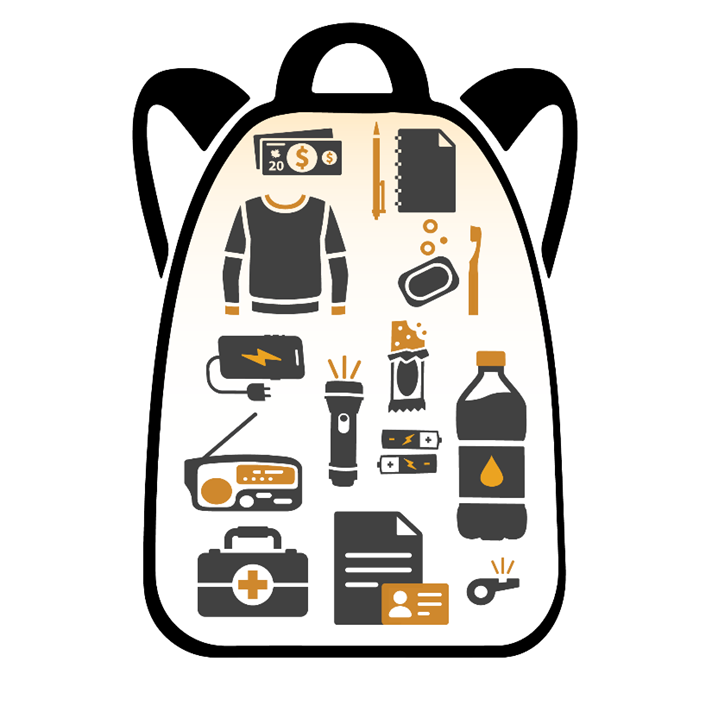
By gathering important supplies before a disaster strikes you and your family will be able to withstand an evacuation or a need to shelter-in-place. Below is a list of items you’ll likely need during an emergency. Remember to keep the items in an easy-to-carry container or bag.
Basic Necessities
- Water (one gallon per person per day for several days, for drinking and sanitation)
- Food (at least a several-day supply of non-perishable food, such as, tuna packets or granola bars)
- Manual can opener
- Battery-powered or hand crank radio and a NOAA Weather Radio with tone alerts
- Flashlight
- First aid kit
- Extra batteries
- Whistle (to signal for help)
- Moist towelettes, garbage bags (for personal sanitation)
- Local maps
- Cell phone with chargers and a backup battery
- Recent family photograph
Additional Emergency Supplies Based on Your Individual Needs
- Hygiene & Medications
- Soap, hand sanitizer, and disinfecting wipes
- Personal hygiene and feminine supplies items
- Prescription medications
- Non-prescription medications
- Prescription glasses and contact lens solution
- Face Coverings
- Complete change of clothing
- Sleeping bag
- Important Family Documents
- Cash or traveler's checks
- Important family documents such as copies of insurance policies, identification and bank account records saved electronically or in a waterproof, portable container
- Paper and pencil
- Pets
- Pet food, treats, and extra water for your pet
- Food and water bowls
- Contact information for veterinarian
- Vaccination records
- A recent photo of your pets in case they get lost
- Sturdy leashes and/or carriers
- Cat litter and box
- Medical information and records
- Any necessary medication
- Plastic bags for clean-up
- Children
- Books, games, puzzles or other activities
- Favorite snacks
- Diapers, formula, wipes, and diaper rash cream
Step 3: Stay Informed
Emergency Alerts/Notifications
When emergencies strike, public safety officials use timely and reliable systems to alert you.
Use this list to sign up for your city's emergency alert system. If you do not see your town listed, sign up for Kane County's emergency notification system.
Additional emergency alerts can be turned on in your phone setting. You are not charged for receiving these alerts, and there is no need to subscribe.
- For
iPhone users, go to settings > notifications > scroll all the way to the bottom > turn on/off alerts (Amber Alerts, Emergency, Public Safety, and Test Alerts)
- For
Android users, go to Settings > Safety & Emergency > Wireless Emergency Alerts > 'Allow Alerts'
Cooling/Warming Centers or Shelters
Don't brave extreme weather alone. Kane County operates seasonal warming and cooling centers to protect residents from harsh winters and intense summer heat. As extreme heat events become more frequent in Kane County, knowing your nearest center – and having a plan to get there - is one of the simplest and most important ways to keep yourself and your neighbors safe.
Visit Kane County Health Department's Webpage on
Warming and Cooling Centers.
Step 4: Share What You Learn
Share what you've learned with family, friends, and neighbors. Let them know about possible hazards and how to prepare for them. Working together makes your community stronger and safer.
Preparedness Starts with You
Preparing for emergencies doesn't have to happen all at once. Every step you take, from learning about local hazards, building an emergency kit, staying informed, and sharing what you've learned, helps protect you, your family, and your community.
Review your emergency plan each year, update your supplies as your household changes, and stay connected to local emergency alerts and trusted information. By taking small actions today, you can be better prepared for whatever tomorrow may bring.
Thank you for taking the time to prepare and build a safer, more resilient Kane County.
Resources
Emergency Planning
Guia de planificacion para Emergencias
Family Communication Plan
Plan de Comunicacion Familiar
Emergency Financial First Aid Kit
Kit de Primeros Auxilios Financieros de Emergencia
General Preparedness Information
Emergency Preparedness Tips for Those with Functional Needs
Emergency Preparedness Tips for Those with Animals/Pets
Emergency Preparedness Tips for Those with Children
Emergency Preparedness Tips for Those with Seniors
